 EN
EN

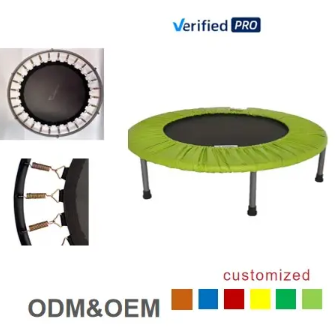
Outdoor fitness has become a mainstream trend in recent years, with more commercial fitness centers expanding their spaces to the outdoors to provide customers with fresh air and diverse training experiences. A high-quality fitness trampoline is a must-have equipment for outdoor commercial fitness centers, as it combines fun and effectiveness, attracting users of different ages and fitness levels. However, choosing the right fitness trampoline for outdoor commercial scenarios is not a simple task. It needs to consider factors such as durability, safety, adaptability to outdoor environments and user capacity. This article will guide you through the key points of selecting a fitness trampoline for outdoor commercial fitness centers.
Core Selection Criteria for Outdoor Commercial Fitness Trampolines
Weather Resistance and Durability
Outdoor fitness equipment is exposed to wind rain sunlight and temperature changes all year round, so the weather resistance of a fitness trampoline directly determines its service life. For commercial scenarios, durability is particularly important because it needs to withstand high-frequency use by multiple users every day. The frame of the fitness trampoline should be made of galvanized steel with powder coating, which can effectively resist rust and corrosion caused by moisture and oxygen. Galvanized steel forms a protective layer on the surface, preventing the frame from being damaged by rain and snow, while powder coating further enhances its wear resistance and UV resistance.
The jumping mat is another key component. It should be made of high-grade PP material with UV resistance, which can avoid fading and aging due to long-term exposure to sunlight. At the same time, the jumping mat should have high tensile strength to bear the weight of multiple users and frequent jumping impacts. The springs or elastic rods of the fitness trampoline also need to be corrosion-resistant. Stainless steel springs are a good choice, and they should be covered with protective sleeves to prevent rust and improve safety.
Safety Performance
Safety is the top priority for commercial fitness centers, especially for outdoor fitness equipment that is used by a large number of people. A qualified outdoor commercial fitness trampoline must be equipped with complete safety facilities. The safety enclosure net is essential, which should be made of high-density polyethylene material with small mesh size to prevent users from falling off the trampoline. The enclosure net should be tightly connected to the frame, and the connection points should be reinforced to avoid loosening during use.
The frame and edges of the fitness trampoline should be covered with thick EPE or PVC padding to absorb the impact when users collide with the frame, reducing the risk of injury. In addition, the trampoline should have a stable support structure. Multiple legs with anti-slip pads are recommended to ensure that the trampoline does not shake or move during use, even on uneven outdoor ground. It is also important to choose a fitness trampoline that meets international safety standards, such as ASTM or EN certification, to ensure that all components meet strict safety requirements.
Size and Shape Selection for Commercial Scenarios
Size Adaptation to Space and User Capacity
Outdoor commercial fitness centers usually have a certain amount of open space, but the size of the fitness trampoline still needs to be determined according to the actual layout. For large-scale fitness centers with sufficient space, 12FT to 16FT fitness trampolines are suitable, which can accommodate 2 to 4 users at the same time, improving the utilization rate of equipment. For smaller outdoor spaces, 10FT trampolines are a better choice, which can meet the needs of individual training without occupying too much area.
It should be noted that the installation of the fitness trampoline needs to leave a safe distance of at least 3 feet from surrounding objects such as trees, walls and other equipment to avoid injuries caused by collisions. At the same time, the ground where the trampoline is installed should be flat. If the ground is uneven, a cushioning layer or adjustment pad should be used to ensure the stability of the trampoline.
Shape Selection Based on Training Needs
The shape of the fitness trampoline affects the bounce effect and training experience, so it should be selected according to the training needs of the outdoor fitness center. Round trampolines are the most common, with evenly distributed springs that provide a consistent bounce and naturally guide users to the center, which is suitable for casual training and beginners. Rectangular trampolines have a more directional bounce and a larger jumping area, which is suitable for advanced users and gymnastic training, making them a good choice for fitness centers that provide professional training courses.
Oval trampolines combine the advantages of round and rectangular trampolines, with a larger jumping area than round ones and a more stable bounce than rectangular ones, which is suitable for multi-user training and diverse outdoor fitness activities. No matter which shape is chosen, it is necessary to ensure that the bounce performance meets the needs of commercial use and can withstand long-term high-frequency jumps.
Recommended Brands and Maintenance Suggestions
Trustworthy Commercial Fitness Trampoline Brands
Choosing a reliable brand is the guarantee of the quality and safety of the fitness trampoline. Rebound Products is a globally renowned brand that produces professional-grade fitness trampolines for commercial use. Its products are designed with Olympic-level standards, with reinforced frames, high-quality springs and competition-level jumping mats, which are suitable for high-performance outdoor fitness centers. ACON, a Finnish brand, is known for its durable and safe trampolines. Its outdoor commercial models are made of galvanized steel and UV-resistant materials, with excellent weather resistance and safety performance.
For fitness centers that focus on safety and innovation, Springfree is a good choice. Its patented springless design uses flexible composite rods instead of metal springs, eliminating the risk of injury caused by springs, and the hidden frame design further improves safety. These brands have a good reputation in the industry and provide perfect after-sales service, which is suitable for outdoor commercial fitness centers.
Daily Maintenance to Extend Service Life
Regular maintenance can effectively extend the service life of the outdoor commercial fitness trampoline and ensure its safe operation. It is necessary to clean the jumping mat and enclosure net regularly with a wet sponge or low-pressure water jet to remove dust and dirt. Avoid using corrosive cleaning agents to prevent damage to the material. Check the frame, springs, enclosure net and other components regularly. If there is rust, loosening or damage, repair or replace them in time.
In severe weather such as strong winds and heavy rains, the safety enclosure net of the fitness trampoline should be disassembled to reduce wind resistance and avoid structural damage. The trampoline should be anchored firmly with anchor kits to prevent it from being blown over by strong winds. For areas with obvious seasonal changes, the trampoline components should be stored in a dry and ventilated place during the off-season to avoid damage caused by extreme temperatures and humidity. Proper maintenance not only ensures the safety of users but also reduces the cost of equipment replacement for outdoor fitness centers.
In conclusion, selecting a suitable fitness trampoline for outdoor commercial fitness centers requires comprehensive consideration of weather resistance, safety, size, shape and brand. A high-quality fitness trampoline can not only provide a good training experience for users but also enhance the competitiveness of the fitness center. By following the above selection criteria and maintenance suggestions, outdoor commercial fitness centers can choose a fitness trampoline that meets their needs and ensures long-term stable operation.