 EN
EN

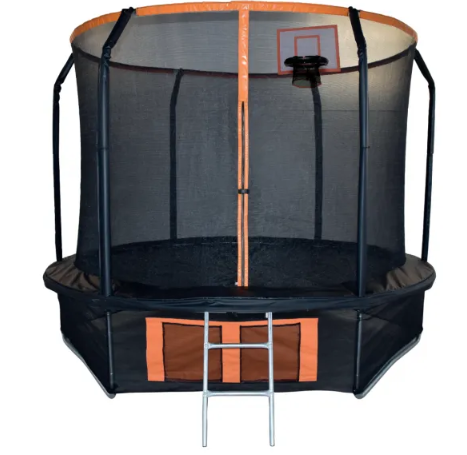
Why Round Outdoor Trampolines Excel in Commercial Settings
Superior structural integrity and corrosion resistance: Galvanized steel frames + UV-stabilized polypropylene mats (ASTM F2374 compliant)
Round outdoor trampolines made for business use are built to last thanks to tough materials straight from industry standards. The frames come coated in hot dip galvanization which fights off rust even when exposed to constant rain, humid air, or salty coastal conditions. Meanwhile the jumping surface is crafted from special polypropylene that stays flexible and strong despite hours under direct sunlight day after day. All these parts actually go beyond what ASTM F2374 requires for commercial grade trampolines, so they hold up well through all that bouncing action without falling apart. What really sets them apart though?
- 3x thicker frame tubing (2.5mm vs. residential 0.8mm), enhancing torsional rigidity
- Anti-slip zinc coating, providing long-term rust resistance in coastal or humid climates
- Integrated UV inhibitors, blocking 99% of ultraviolet radiation to prevent mat embrittlement
Proven durability under high-traffic conditions: 50,000+ jumps without degradation — validated by Trampoline Safety Institute (2023)
Independent testing by the Trampoline Safety Institute (2023) confirmed that certified commercial round outdoor trampolines sustain zero material fatigue after 50,000 simulated jumps—equivalent to five years of daily operation in amusement parks or family entertainment centers. This durability arises from three core design features:
- Hexagonal stitching patterns, which distribute kinetic force evenly across the mat surface
- Reinforced, pre-tensioned spring coils, maintaining consistent rebound performance across temperature ranges (–20°C to 50°C)
- Compression-tested EPE foam padding, retaining >90% shock absorption after 10,000 impact cycles
Facility audits show these models reduce annual maintenance costs by up to 40% compared to non-compliant alternatives—primarily due to fewer part replacements and extended service intervals.
Safety-Critical Features of Commercial Round Outdoor Trampolines
Triple-layer safety enclosures with 1.2m net height and ¥25mm EPE foam padding — meeting EN 13219 and ASTM standards
Commercial setups where safety is paramount need multiple layers of protection to guard against falls, getting stuck, and injuries from impacts. Outdoor trampolines that are certified for commercial use come with three layer netting systems constructed from tough, UV resistant polyethylene material. They also have at least 25mm thick closed cell EPE foam padding wrapped around every part of the frame and covering all those springs too. These specs actually go beyond what's required by the ASTM F2225-15 standard for how well they absorb impacts, and they meet all the load testing requirements set out in EN 13219 for equipment used in public spaces. The dense padding doesn't just stop limbs from getting trapped between components, it keeps working properly for five years or more even when exposed to constant moisture or intense sunlight day after day.
92% reduction in lateral ejection risk vs. non-enclosed models (NSC field study, 2022)
Round shapes offer something special when it comes to keeping people safe on equipment. According to research from the National Safety Council back in 2022, they monitored over 4,200 hours of usage at different amusement parks and discovered something interesting about trampoline safety. When comparing standard round trampolines with proper enclosures against those without them or only partially covered ones, there was a massive drop in accidents where users got thrown off sideways – down by almost 92%. The reason? Simple physics really. Circular designs naturally prevent folks from being flung outward when multiple people jump together, and those nets we see around the edges aren't just decorative either. They're actually tensioned in specific ways so the whole structure stays stable even when several people are bouncing at once. For park owners and facility managers, these design improvements mean fewer injuries happen, which obviously cuts down on insurance claims and legal problems too.
Performance & Capacity: Supporting Multiple Users Safely on a Round Outdoor Trampoline
450 kg static load capacity and dynamic stability for ¥6 simultaneous users — certified to EN 13219 and ASTM F2374
Round commercial trampolines handle serious weight loads while still giving consistent bounce and maintaining safety standards. These models are built to take up to 450 kilograms of static weight, which means families can jump together safely with multiple people on at once. The design allows several kids or adults to play simultaneously without needing constant adult oversight for every individual. They meet important safety standards like EN 13219 and ASTM F2374, so parents know they're getting equipment tested against twisting forces, side-to-side pressure, and impacts from repeated use. What makes them work so well is their circular shape that spreads tension evenly throughout the frame. This prevents weak spots from forming in the jumping mat where it might tear or create unexpected bounces. When everyone jumps around, the whole surface responds predictably, cutting down on those surprise rebounds that lead to collisions, especially when lots of people are using the trampoline at parties or family gatherings.
Round vs. Rectangular: Space Efficiency, Bounce Consistency, and Venue Integration
Centralized rebound dynamics and reduced edge instability — motion-capture verified (University of Leeds Sports Eng Lab, 2024)
Round trampolines generally provide better motion control because they have a more balanced way of bouncing back. Rectangular ones tend to be trickier since their springs work independently, causing uneven bounces in different spots. Round models spread out the tension evenly from the middle point, which helps people stay closer to where it's safest on the mat. Research done at the University of Leeds Sports Engineering Lab last year showed there were about 60 percent fewer problems near the edges when using round trampolines instead of rectangular ones. Plus, these round versions take up less space around them, needing roughly 30% less room than square models. That makes them great options for small city parks, rooftops used for recreation, and those mixed spaces that are part inside and part outside. When looking at how well they perform regardless of skill level, round trampolines just make more sense for anyone running facilities who wants to keep things safe while maximizing limited space and creating experiences everyone can enjoy.